Wine atlas · AU · South Australia GI
Grange
Penfolds · 950 US label registrations
A multi-regional Australian icon based on Shiraz, trading the European idea of a single place for style consistency built through selection and blending.
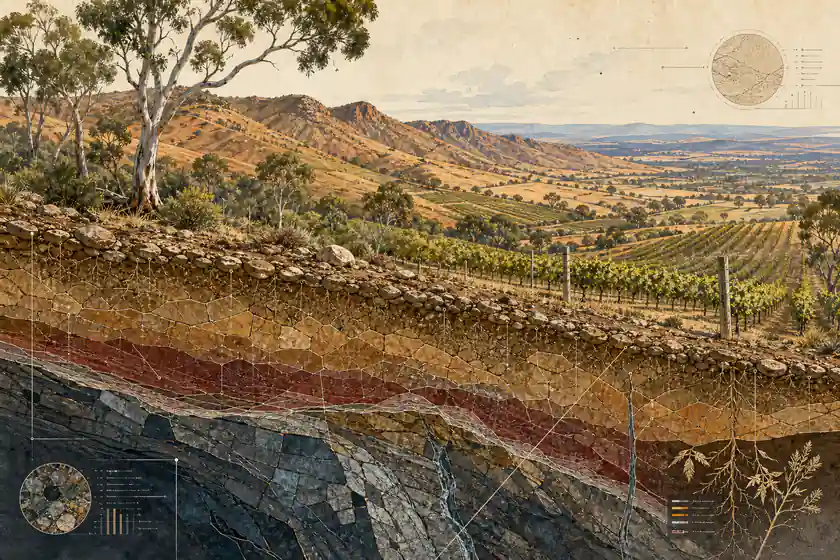
01 · Profile in the glass
Multi-regional Australian Shiraz
An editorial reading based on style, grapes, and sources — not a tasting note for this bottle.
- Color
- Deep red with an almost black core.
- Palate
- Very full-bodied, dense, and tannic, with concentrated black fruit and evident oak. Acidity must show for the wine to feel monumental rather than simply sweet or heavy.
- Finish
- Very long, dark finish with cocoa, licorice, and persistent tannin.
Aromatic families
- blackberry
- black plum
- licorice
- cocoa
- dark spice
- cured meat
02 · The terroir shaping the wine
South Australia GI
Grange is deliberately multi-regional: the terroir lesson runs in reverse. Instead of one parcel explaining the wine, the style seeks continuity through selection of South Australian regions and lots, with Shiraz at the center and occasional Cabernet Sauvignon components depending on vintage.
- Soil
- Extremely varied across zones
- Altitude
- 0–600 m
- Annual rainfall
- Not catalogued
- Heat summation
- Not catalogued
- Aspect
- Plains, valleys, and hills
- Harvest
- February to April
- Appellation
- GI · AU-GI-SA
03 · From landscape to flavor
From landscape to flavor
Every relationship displays its evidence grade and source; contested links remain visibly contested.
Greater heat accumulation tends to support Ripe fruit
Within the limits of variety and management, more heat can accelerate ripening and shift fruit profile.
Influence of Climate, Soil, and Cultivar on TerroirHarvest timing tends to support Freshness
Harvest date changes the observable combination of sugar, acidity, and aromatic maturity.
Standards and technical documents: viticultureCluster sunlight exposure tends to support Color
Exposure changes ripening and pigmentation processes, with effects depending on variety and intensity.
Standards and technical documents: viticultureOak contact tends to support Vanilla
Wood-derived compounds can contribute aromas associated with vanilla.
Oak influence in wineOld vines tends to support Concentration
Vine age is often associated with concentration, but site selection, yield, and management confound attribution.
Standards and technical documents: viticultureLarge diurnal temperature range tends to support Freshness
Diurnal range is often used to explain freshness, but averages, extremes, and available water also matter.
Influence of Climate, Soil, and Cultivar on TerroirSite dominates cultivar tends to support Structure
Terroir studies show interaction among climate, soil, and cultivar, not a fixed hierarchy in every context.
Influence of Climate, Soil, and Cultivar on Terroir04 · How to read this bottle
How to read this bottle
bordeaux
Bottle anatomy
Drag to rotate, then use the wheel or pinch gesture to zoom. The points open notes about the shape.
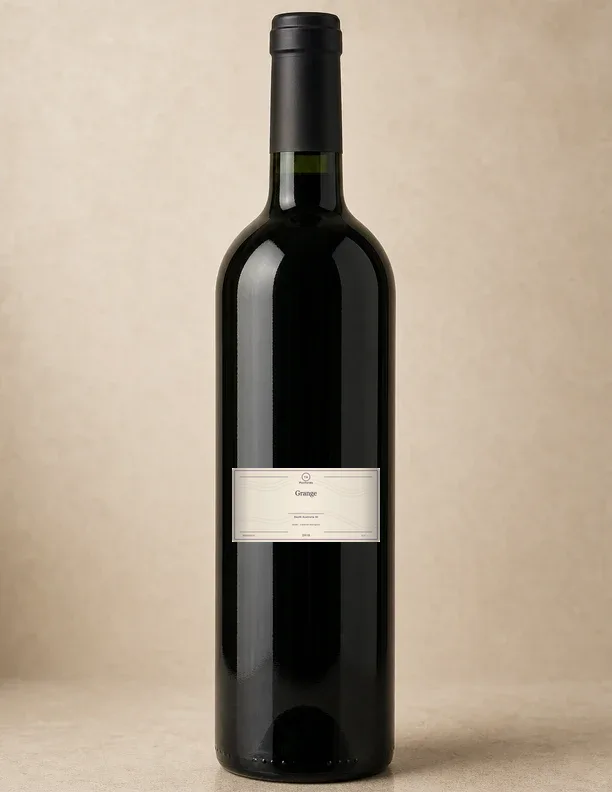
Drag to rotate, then use the wheel or pinch gesture to zoom. The points open notes about the shape.
This device is using the static edition. The label and every annotation remain accessible.
05 · How it is made
How it is made
Penfolds material presents Grange as Bin 95, produced since 1951 and marked by fermentation/elevage in new American oak. The method is part of the style: density, longevity, and an oak signature are intentional.
06 · Why it matters
Why it matters
This page matters because it challenges the simple idea that great wine always comes from one vineyard. Grange is house architecture: fruit selection, blending, and maturation keep a recognizable shape across vintages.
07 · Serving and table
Serving and table
- Temperature
- 16–18 °C
- Decanting
- Decant 2 hours when young; for mature bottles, decant mainly to separate sediment and follow evolution in the glass.
- Glass
- Large full-bodied red wine glass.
Pairings
- slow-cooked meats
- intense mushrooms
- smoked eggplant
- aged cheeses
08 · Points to remember
Points to remember
- Penfolds describes Grange as Bin 95.
- The style is multi-regional, not a single-vineyard reading.
- New American oak is a historic part of the wine’s identity.