Wine atlas · US · Santa Cruz Mountains AVA
Monte Bello
Ridge Vineyards · 983 US label registrations
Mountain Bordeaux-style blend from the Santa Cruz Mountains, driven more by limestone, elevation, and acidity than by the usual sunny California Cabernet image.
01 · Profile in the glass
Mountain Cabernet blend
An editorial reading based on style, grapes, and sources — not a tasting note for this bottle.
- Color
- Dark, concentrated ruby
- Palate
- Structured and precise, with firm tannin, higher acidity for the style, and concentration that unfolds in layers.
- Finish
- Long, stony, and dry, with black fruit and an herbal note.
Aromatic families
- cassis
- black cherry
- plum
- sage
- wet clay
- cocoa
- cedar
- dried herb
02 · The terroir shaping the wine
Santa Cruz Mountains AVA
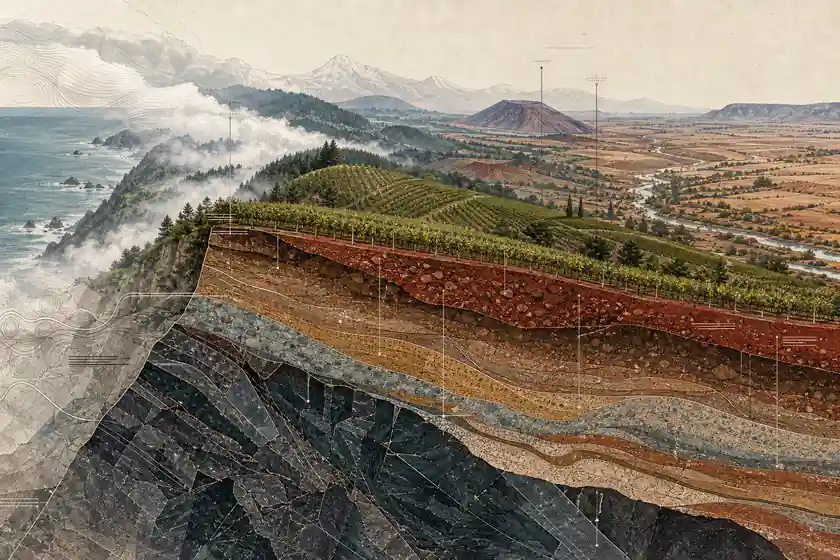
Monte Bello sits high in the Santa Cruz Mountains, with parcels from about 1,300 to 2,700 feet. Its unusual combination of green stone, clay, and decomposing limestone gives a less obvious Cabernet: dark fruit, but also tension, herb, and a mineral impression that should be read as a descriptor, not literal rock transfer.
- Soil
- Franciscan, limestone, and residual soils
- Altitude
- 120–900 m
- Annual rainfall
- 650 mm
- Heat summation
- Not catalogued
- Aspect
- Mountain slopes
- Harvest
- September to October
- Appellation
- AVA · TTB-27CFR9.31
03 · From landscape to flavor
From landscape to flavor
Every relationship displays its evidence grade and source; contested links remain visibly contested.
Greater heat accumulation tends to support Ripe fruit
Within the limits of variety and management, more heat can accelerate ripening and shift fruit profile.
Influence of Climate, Soil, and Cultivar on TerroirHarvest timing tends to support Freshness
Harvest date changes the observable combination of sugar, acidity, and aromatic maturity.
Standards and technical documents: viticultureCluster sunlight exposure tends to support Color
Exposure changes ripening and pigmentation processes, with effects depending on variety and intensity.
Standards and technical documents: viticultureOak contact tends to support Vanilla
Wood-derived compounds can contribute aromas associated with vanilla.
Oak influence in wineOld vines tends to support Concentration
Vine age is often associated with concentration, but site selection, yield, and management confound attribution.
Standards and technical documents: viticultureLarge diurnal temperature range tends to support Freshness
Diurnal range is often used to explain freshness, but averages, extremes, and available water also matter.
Influence of Climate, Soil, and Cultivar on TerroirSite dominates cultivar tends to support Structure
Terroir studies show interaction among climate, soil, and cultivar, not a fixed hierarchy in every context.
Influence of Climate, Soil, and Cultivar on Terroir04 · How to read this bottle
How to read this bottle
bordeaux
Bottle anatomy
Drag to rotate, then use the wheel or pinch gesture to zoom. The points open notes about the shape.
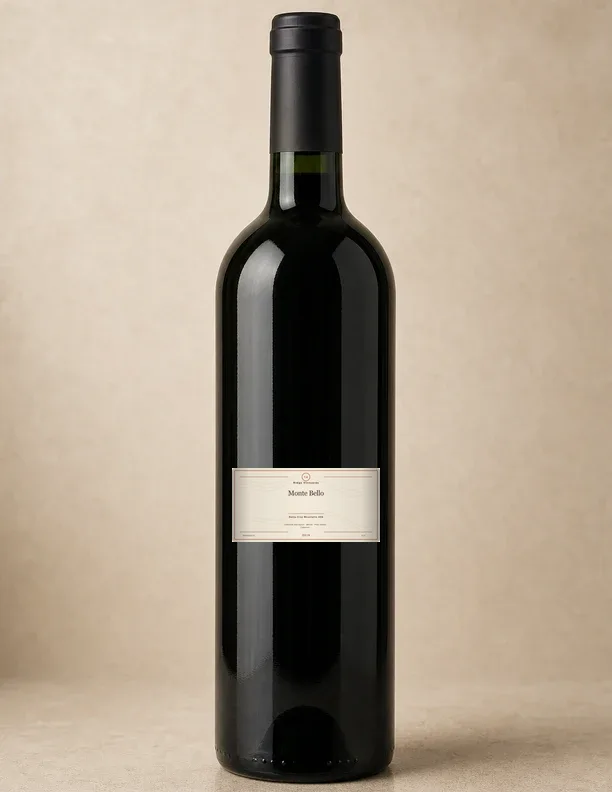
Drag to rotate, then use the wheel or pinch gesture to zoom. The points open notes about the shape.
This device is using the static edition. The label and every annotation remain accessible.
05 · How it is made
How it is made
The official 2019 sheet records destemmed whole-berry fermentation, native yeasts, natural malolactic, and a blend of Cabernet Sauvignon, Merlot, Petit Verdot, and Cabernet Franc.
06 · Why it matters
Why it matters
Monte Bello teaches that “California” is not one style. Elevation, Pacific exposure, and limestone change Cabernet’s grammar: less jam, more line, tannin, and longevity.
07 · Serving and table
Serving and table
- Temperature
- 16-18°C
- Decanting
- Two hours for young vintages. For older bottles, decant for sediment and follow the opening patiently.
- Glass
- Large Bordeaux stem, with room for tannin and notes of herb, wood, and dark fruit.
Pairings
- roast rib
- herbed mushrooms
- lamb
- polenta with ragù
- aged hard cheeses
08 · Points to remember
Points to remember
- Ridge reports approximately 1,300 to 2,700 feet of elevation at Monte Bello.
- The 2019 sheet records 82% Cabernet Sauvignon, 9% Merlot, 8% Petit Verdot, and 1% Cabernet Franc.
- The producer highlights decomposing limestone as a distinctive part of the site.