Wine atlas · US · Napa Valley AVA
CASK 23 Cabernet Sauvignon
Stag’s Leap Wine Cellars · 515 US label registrations
Napa Cabernet Sauvignon built from FAY and S.L.V., joining perfume, dark fruit, and polished tannin in a classic Stags Leap District reading.
01 · Profile in the glass
Selected-block Napa Cabernet
An editorial reading based on style, grapes, and sources — not a tasting note for this bottle.
- Color
- Deep ruby
- Palate
- Full and supple on entry, with velvety tannin, blackberry and currant fruit, and enough structure to extend the finish.
- Finish
- Long, elegant, and marked by dark fruit and sweet spice.
Aromatic families
- cassis
- red currant
- blackberry
- black tea
- anise
- nutmeg
- integrated oak
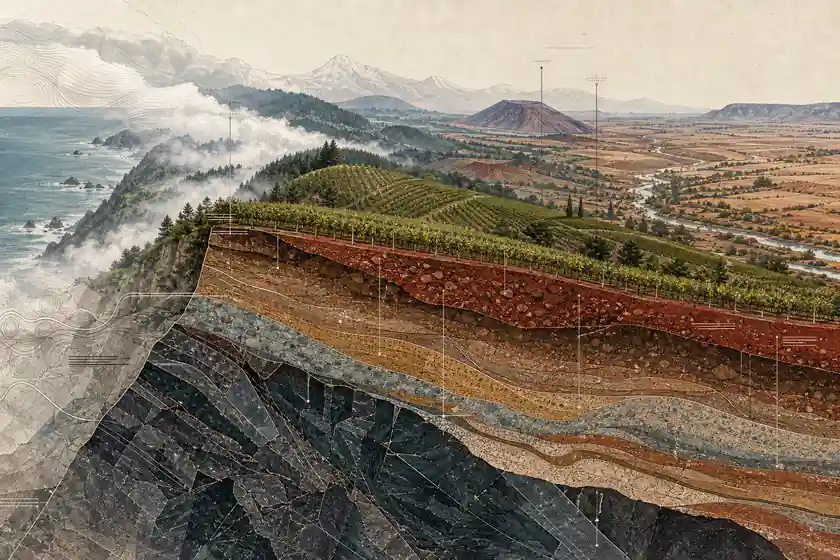
02 · The terroir shaping the wine
Napa Valley AVA
CASK 23 is an estate-vineyard reading: the house frames FAY as more perfumed, while S.L.V. contributes structure and dark fruit. The teaching point is that terroir can be a comparison inside one property, not only country versus country.
- Soil
- Volcanic, alluvial, and sedimentary
- Altitude
- 0–800 m
- Annual rainfall
- 650 mm
- Heat summation
- Not catalogued
- Aspect
- Valley floor and slopes
- Harvest
- August to October
- Appellation
- AVA · TTB-27CFR9.23
03 · From landscape to flavor
From landscape to flavor
Every relationship displays its evidence grade and source; contested links remain visibly contested.
Greater heat accumulation tends to support Ripe fruit
Within the limits of variety and management, more heat can accelerate ripening and shift fruit profile.
Influence of Climate, Soil, and Cultivar on TerroirHarvest timing tends to support Freshness
Harvest date changes the observable combination of sugar, acidity, and aromatic maturity.
Standards and technical documents: viticultureCluster sunlight exposure tends to support Color
Exposure changes ripening and pigmentation processes, with effects depending on variety and intensity.
Standards and technical documents: viticultureOak contact tends to support Vanilla
Wood-derived compounds can contribute aromas associated with vanilla.
Oak influence in wineOld vines tends to support Concentration
Vine age is often associated with concentration, but site selection, yield, and management confound attribution.
Standards and technical documents: viticultureLarge diurnal temperature range tends to support Freshness
Diurnal range is often used to explain freshness, but averages, extremes, and available water also matter.
Influence of Climate, Soil, and Cultivar on TerroirSite dominates cultivar tends to support Structure
Terroir studies show interaction among climate, soil, and cultivar, not a fixed hierarchy in every context.
Influence of Climate, Soil, and Cultivar on Terroir04 · How to read this bottle
How to read this bottle
bordeaux
Bottle anatomy
Drag to rotate, then use the wheel or pinch gesture to zoom. The points open notes about the shape.
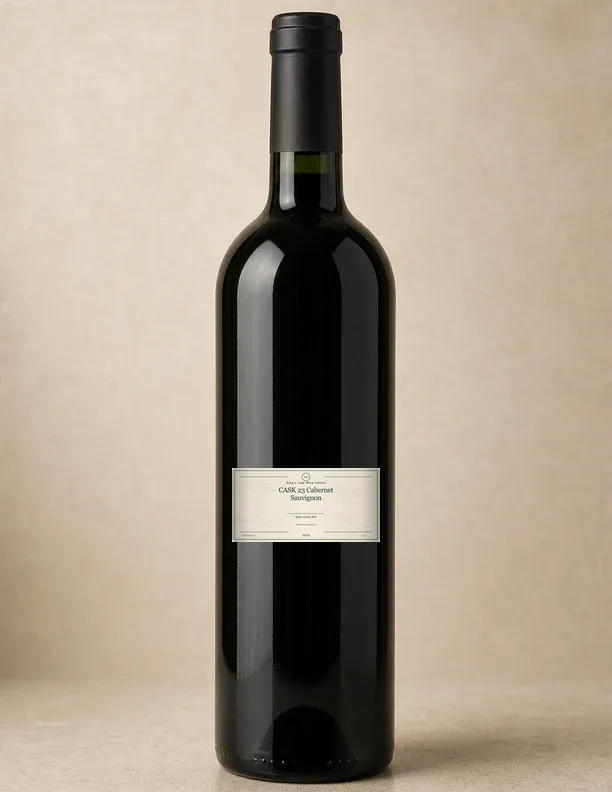
Drag to rotate, then use the wheel or pinch gesture to zoom. The points open notes about the shape.
This device is using the static edition. The label and every annotation remain accessible.
05 · How it is made
How it is made
The wine historically began from an exceptional lot/cask. Today the official profile emphasizes combining FAY and S.L.V. parcels in suitable years, with Cabernet Sauvignon as the axis.
06 · Why it matters
Why it matters
The trap is treating Napa as a synonym for weight. CASK 23 shows another vocabulary: perfume, tannin texture, and well-defined dark fruit, without relying on sweetness.
07 · Serving and table
Serving and table
- Temperature
- 16-18°C
- Decanting
- One to two hours for young vintages. If the bottle is advanced, prioritize sediment removal and serve in stages.
- Glass
- Large Bordeaux stem to open cassis, black tea, and tannin without over-concentrating alcohol.
Pairings
- grilled strip steak
- beef rib
- portobello mushrooms
- herbed lentils
- aged cheddar
08 · Points to remember
Points to remember
- The 2019 vintage combines FAY perfume with S.L.V. structure and dark fruit, according to the producer note.
- CASK 23 belongs to Stag’s Leap Wine Cellars’ estate/single-vineyard collection.
- Stags Leap District/Napa should be read as context for texture and ripeness, not as an automatic flavor guarantee.