Wine atlas · PT · Porto DOC
Taylor’s Vintage Port 2016
Taylor Fladgate · 139 US label registrations
Vintage Port declared by the producer.
01 · Profile in the glass
Structured Vintage Port
An editorial reading based on style, grapes, and sources — not a tasting note for this bottle.
- Color
- Deep ruby with a purple core
- Palate
- Dense and upright: sweetness is clear, but tannin, acidity, and integrated alcohol keep the wine from reading as merely rich.
- Finish
- Long, dark, and herbal, with fruit returning after the structure.
Aromatic families
- blackberry
- cassis
- fresh plum
- gumcistus
- violet
- cedar
- sweet spice
02 · The terroir shaping the wine
Porto DOC
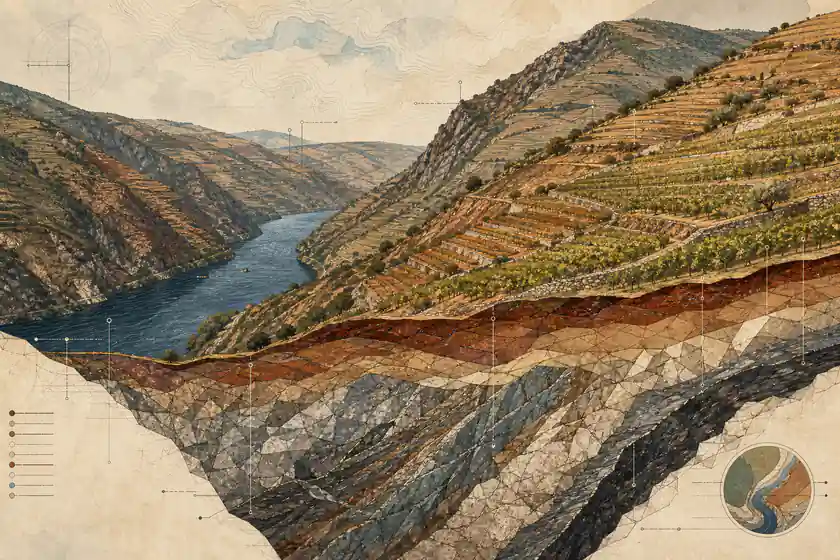
The Douro combines steep slopes, schist, and dry heat. In Vintage Port, that landscape reads less as aromatic delicacy and more as concentration: small berries, intense ripeness, and estate blending to balance power with precision.
- Soil
- Schist and granite
- Altitude
- 80–650 m
- Annual rainfall
- 450 mm
- Heat summation
- Not catalogued
- Aspect
- Terraced slopes
- Harvest
- August to October
- Appellation
- DOC · PT-PORTO-DOC
03 · From landscape to flavor
From landscape to flavor
Every relationship displays its evidence grade and source; contested links remain visibly contested.
Greater heat accumulation tends to support Ripe fruit
Within the limits of variety and management, more heat can accelerate ripening and shift fruit profile.
Influence of Climate, Soil, and Cultivar on TerroirHarvest timing tends to support Freshness
Harvest date changes the observable combination of sugar, acidity, and aromatic maturity.
Standards and technical documents: viticultureCluster sunlight exposure tends to support Color
Exposure changes ripening and pigmentation processes, with effects depending on variety and intensity.
Standards and technical documents: viticultureOak contact tends to support Vanilla
Wood-derived compounds can contribute aromas associated with vanilla.
Oak influence in wineOld vines tends to support Concentration
Vine age is often associated with concentration, but site selection, yield, and management confound attribution.
Standards and technical documents: viticultureLarge diurnal temperature range tends to support Freshness
Diurnal range is often used to explain freshness, but averages, extremes, and available water also matter.
Influence of Climate, Soil, and Cultivar on TerroirSite dominates cultivar tends to support Structure
Terroir studies show interaction among climate, soil, and cultivar, not a fixed hierarchy in every context.
Influence of Climate, Soil, and Cultivar on Terroir04 · How to read this bottle
How to read this bottle
porto
Bottle anatomy
Drag to rotate, then use the wheel or pinch gesture to zoom. The points open notes about the shape.
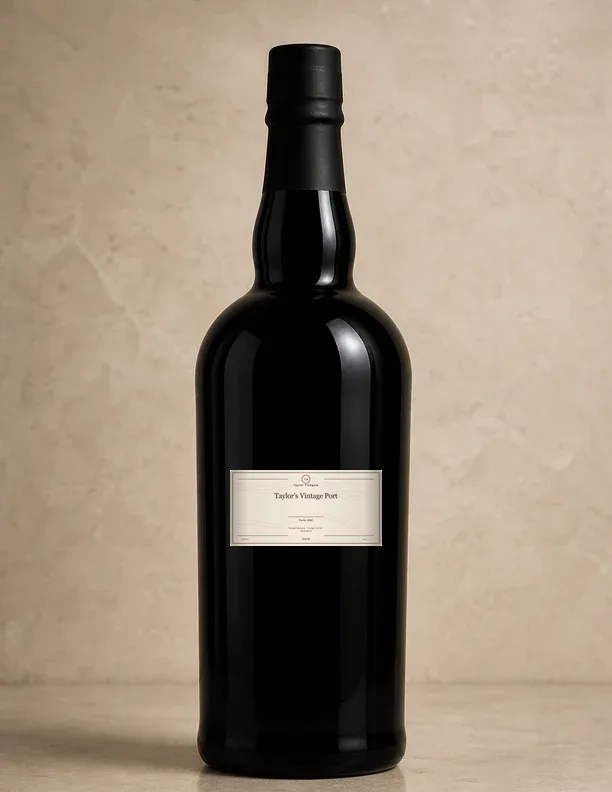
Drag to rotate, then use the wheel or pinch gesture to zoom. The points open notes about the shape.
This device is using the static edition. The label and every annotation remain accessible.
05 · How it is made
How it is made
As Vintage Port, it spends a short period in wood before bottling, where its main evolution takes place. Fortification stops fermentation and preserves natural sugar, while extraction must support decades of aging.
06 · Why it matters
Why it matters
Taylor Fladgate frames its Vintage Ports as massively structured and aromatically powerful yet restrained. The lesson here is to separate intensity from weight: the style can be huge without becoming simple sweetness.
07 · Serving and table
Serving and table
- Temperature
- 16-18°C
- Decanting
- Decant to remove sediment and give the wine air; young bottles may need several hours, while old bottles call for shorter, gentler handling.
- Glass
- A small fortified-wine glass or white-wine stem large enough to focus aroma without amplifying alcohol.
Pairings
- blue cheeses
- dark chocolate
- black-fruit desserts
- toasted nuts
- bottle-evolution study without food
08 · Points to remember
Points to remember
- Vintage Port is bottled early compared with LBV, and long evolution happens in bottle.
- Taylor’s official page describes the style as capable of aging for decades.
- Taylor’s 2016 note emphasizes woodland fruit, gumcistus, and wild herbs.