Wine atlas · IT · Toscana IGT
Tignanello 2019
Marchesi Antinori · 570 US label registrations
Vintage entry with an indicative editorial window.
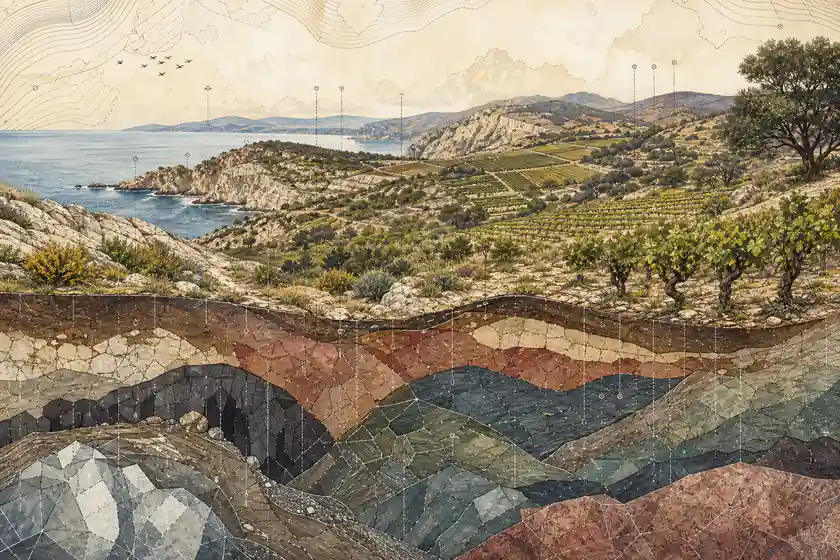
01 · Profile in the glass
Sangiovese-led Super Tuscan
An editorial reading based on style, grapes, and sources — not a tasting note for this bottle.
- Color
- Deep ruby with a garnet rim.
- Palate
- Structured and dry, with firm Sangiovese acidity, broader Cabernet tannin, and dark fruit ripened in a Mediterranean climate.
- Finish
- Long finish of dark cherry, herbs, and integrated oak.
Aromatic families
- dark cherry
- plum
- tobacco
- dried herbs
- cedar
- violet
02 · The terroir shaping the wine
Toscana IGT
Tignanello comes from the Chianti Classico area within Toscana IGT. The teaching point is the tension between hills, galestro/alberese soils, and the IGT category’s freedom to use Cabernet while staying Tuscan in landscape.
- Soil
- Galestro, alberese, and clay
- Altitude
- 100–450 m
- Annual rainfall
- 760 mm
- Heat summation
- Not catalogued
- Aspect
- Varied hillsides
- Harvest
- August to October
- Appellation
- IGT · IT-TOSCANA-IGT
03 · From landscape to flavor
From landscape to flavor
Every relationship displays its evidence grade and source; contested links remain visibly contested.
Greater heat accumulation tends to support Ripe fruit
Within the limits of variety and management, more heat can accelerate ripening and shift fruit profile.
Influence of Climate, Soil, and Cultivar on TerroirHarvest timing tends to support Freshness
Harvest date changes the observable combination of sugar, acidity, and aromatic maturity.
Standards and technical documents: viticultureCluster sunlight exposure tends to support Color
Exposure changes ripening and pigmentation processes, with effects depending on variety and intensity.
Standards and technical documents: viticultureOak contact tends to support Vanilla
Wood-derived compounds can contribute aromas associated with vanilla.
Oak influence in wineOld vines tends to support Concentration
Vine age is often associated with concentration, but site selection, yield, and management confound attribution.
Standards and technical documents: viticultureLarge diurnal temperature range tends to support Freshness
Diurnal range is often used to explain freshness, but averages, extremes, and available water also matter.
Influence of Climate, Soil, and Cultivar on TerroirSite dominates cultivar tends to support Structure
Terroir studies show interaction among climate, soil, and cultivar, not a fixed hierarchy in every context.
Influence of Climate, Soil, and Cultivar on Terroir04 · How to read this bottle
How to read this bottle
bordeaux
Bottle anatomy
Drag to rotate, then use the wheel or pinch gesture to zoom. The points open notes about the shape.
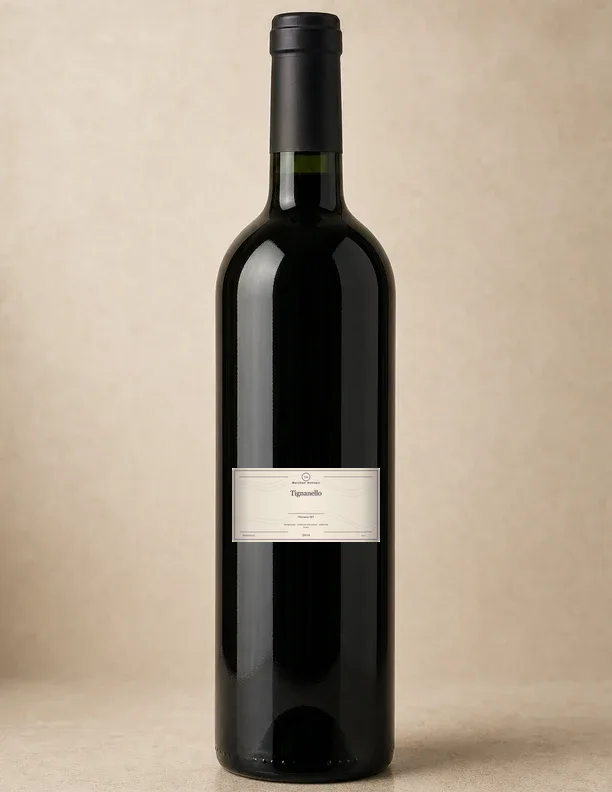
Drag to rotate, then use the wheel or pinch gesture to zoom. The points open notes about the shape.
This device is using the static edition. The label and every annotation remain accessible.
05 · How it is made
How it is made
The producer describes Tignanello as Sangiovese with Cabernet Sauvignon and Cabernet Franc, made with careful selection and wood aging. Read oak as a texture frame, not automatic proof of quality.
06 · Why it matters
Why it matters
It is a useful bottle for explaining why “tradition” and “legal category” are not the same thing: the wine is modern in classification, yet still depends on Tuscan acidity, relief, and vintage.
07 · Serving and table
Serving and table
- Temperature
- 16-18 °C
- Decanting
- 30 to 90 minutes for young bottles; less for mature bottles.
- Glass
- Medium to large Bordeaux glass.
Pairings
- bistecca
- herbed lamb
- ragù pasta
- grilled mushrooms
08 · Points to remember
Points to remember
- Toscana IGT permits Cabernet in the blend.
- Sangiovese keeps the acidic spine.
- The wine is a study in category, not luxury advertising.