Wine atlas · AR · Salta IG
Estate Malbec 2019
Bodega Colomé · 75 US label registrations
Vintage entry with an indicative editorial window.
01 · Profile in the glass
Extreme-altitude Malbec
An editorial reading based on style, grapes, and sources — not a tasting note for this bottle.
- Color
- Dense dark purple.
- Palate
- Full and dark, with ripe fruit and abundant tannin. The interest is contrast: high concentration, but with a fresh nerve that keeps it from feeling static or jammy.
- Finish
- Persistent finish of black fruit, spice, and dry texture.
Aromatic families
- blackberry
- plum
- violet
- pepper
- cocoa
- dried herb
02 · The terroir shaping the wine
Salta IG
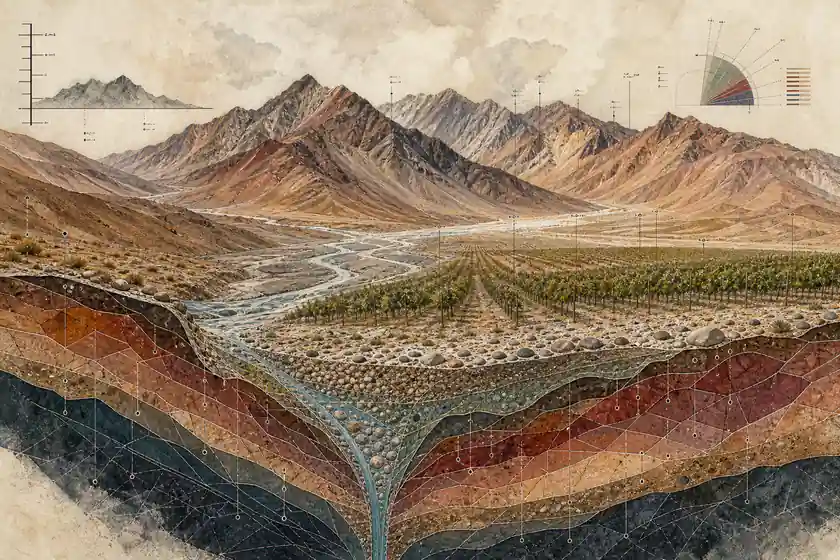
Colomé places the wine in the Upper Calchaquí Valleys, Salta. Estate Malbec blends vineyards at different elevations, with Colomé around 2,300 m, El Arenal around 2,600 m, and La Brava lower. The lesson is to compare altitude, UV radiation, and scarce water rather than treating “Argentine Malbec” as one style.
- Soil
- Sandy and stony alluvium
- Altitude
- 1500–3100 m
- Annual rainfall
- 200 mm
- Heat summation
- Not catalogued
- Aspect
- High valleys
- Harvest
- February to April
- Appellation
- IG · AR-SALTA-IG
03 · From landscape to flavor
From landscape to flavor
Every relationship displays its evidence grade and source; contested links remain visibly contested.
Greater heat accumulation tends to support Ripe fruit
Within the limits of variety and management, more heat can accelerate ripening and shift fruit profile.
Influence of Climate, Soil, and Cultivar on TerroirHarvest timing tends to support Freshness
Harvest date changes the observable combination of sugar, acidity, and aromatic maturity.
Standards and technical documents: viticultureCluster sunlight exposure tends to support Color
Exposure changes ripening and pigmentation processes, with effects depending on variety and intensity.
Standards and technical documents: viticultureOak contact tends to support Vanilla
Wood-derived compounds can contribute aromas associated with vanilla.
Oak influence in wineHigher elevation tends to support Freshness
Elevation can reduce temperatures at some sites; aspect and latitude prevent a universal rule.
Influence of Climate, Soil, and Cultivar on TerroirOld vines tends to support Concentration
Vine age is often associated with concentration, but site selection, yield, and management confound attribution.
Standards and technical documents: viticultureLarge diurnal temperature range tends to support Freshness
Diurnal range is often used to explain freshness, but averages, extremes, and available water also matter.
Influence of Climate, Soil, and Cultivar on TerroirSite dominates cultivar tends to support Structure
Terroir studies show interaction among climate, soil, and cultivar, not a fixed hierarchy in every context.
Influence of Climate, Soil, and Cultivar on Terroir04 · How to read this bottle
How to read this bottle
bordeaux
Bottle anatomy
Drag to rotate, then use the wheel or pinch gesture to zoom. The points open notes about the shape.
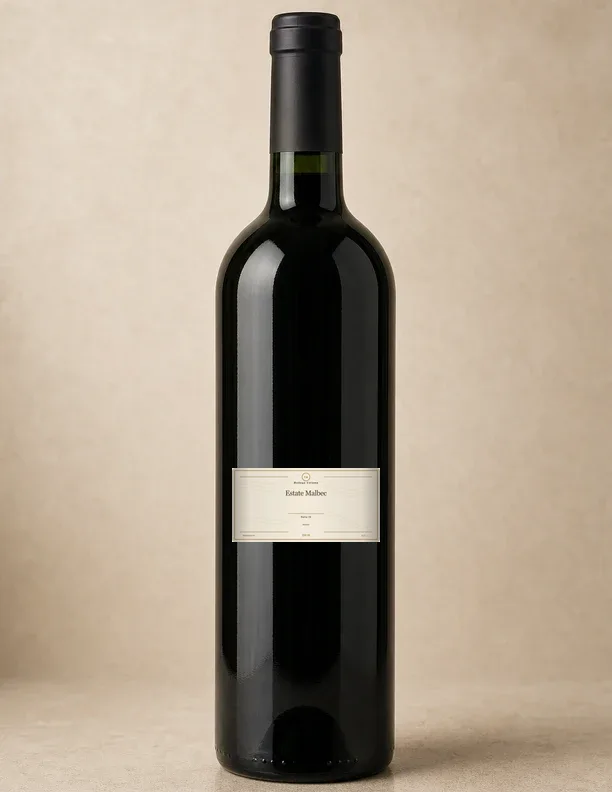
Drag to rotate, then use the wheel or pinch gesture to zoom. The points open notes about the shape.
This device is using the static edition. The label and every annotation remain accessible.
05 · How it is made
How it is made
The producer page lists 100% Malbec and 15 months in second- to fifth-use French oak, followed by six months in bottle. That oak use is more about polish than sweet signature.
06 · Why it matters
Why it matters
This bottle dismantles the cliché that altitude always produces lightness. Here it allows intense ripening under strong light, with enough acidity for the structure to remain legible.
07 · Serving and table
Serving and table
- Temperature
- 16–18 °C
- Decanting
- Decant about 1 hour when young to loosen tannin and oak.
- Glass
- Large glass for structured reds.
Pairings
- grilled meats
- charred eggplant
- spiced beans
- hard cheese
08 · Points to remember
Points to remember
- The producer lists 100% Malbec.
- Blending vineyard parcels by elevation is central to Estate Malbec’s identity.
- The declared oak is mostly previously used barrels.