Wine atlas · IT · Barbaresco DOCG
Barbaresco 2019
Gaja · 777 US label registrations
Vintage entry with an indicative editorial window.
01 · Profile in the glass
Tannic, perfumed Nebbiolo
An editorial reading based on style, grapes, and sources — not a tasting note for this bottle.
- Color
- Translucent garnet, paler than its strength suggests.
- Palate
- The palate combines high acidity and persistent tannin. The wine can look pale in color, but the structure is serious and asks for food or time.
- Finish
- Dry, floral, noble-bitter finish.
Aromatic families
- sour cherry
- dried rose
- anise
- tar
- dried herb
- blood orange
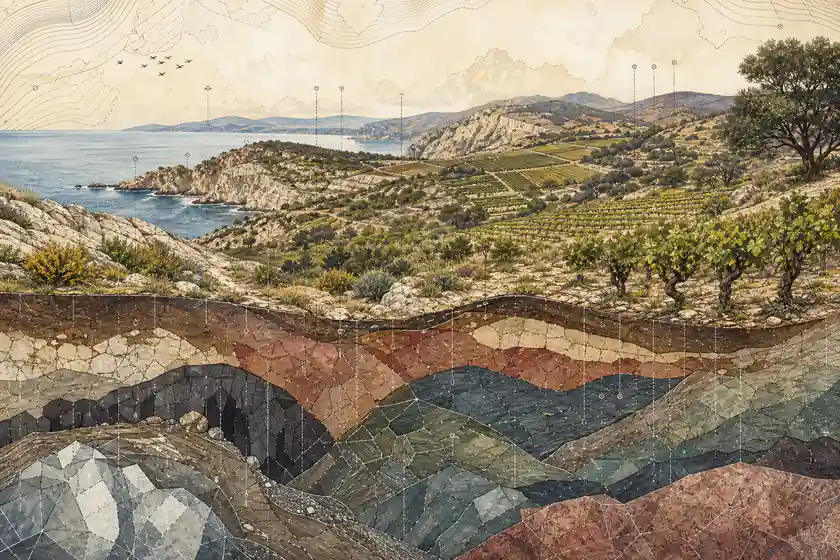
02 · The terroir shaping the wine
Barbaresco DOCG
Barbaresco DOCG lies in the Langhe hills, with calcareous marls and slopes suited to Nebbiolo. The lesson is seeing moderate color alongside tannin and longevity.
- Soil
- Calcareous marl
- Altitude
- 180–450 m
- Annual rainfall
- 800 mm
- Heat summation
- Not catalogued
- Aspect
- Varied hillsides
- Harvest
- September to October
- Appellation
- DOCG · IT-BARBARESCO
03 · From landscape to flavor
From landscape to flavor
Every relationship displays its evidence grade and source; contested links remain visibly contested.
Greater heat accumulation tends to support Ripe fruit
Within the limits of variety and management, more heat can accelerate ripening and shift fruit profile.
Influence of Climate, Soil, and Cultivar on TerroirHarvest timing tends to support Freshness
Harvest date changes the observable combination of sugar, acidity, and aromatic maturity.
Standards and technical documents: viticultureCluster sunlight exposure tends to support Color
Exposure changes ripening and pigmentation processes, with effects depending on variety and intensity.
Standards and technical documents: viticultureOak contact tends to support Vanilla
Wood-derived compounds can contribute aromas associated with vanilla.
Oak influence in wineOld vines tends to support Concentration
Vine age is often associated with concentration, but site selection, yield, and management confound attribution.
Standards and technical documents: viticultureLarge diurnal temperature range tends to support Freshness
Diurnal range is often used to explain freshness, but averages, extremes, and available water also matter.
Influence of Climate, Soil, and Cultivar on TerroirSite dominates cultivar tends to support Structure
Terroir studies show interaction among climate, soil, and cultivar, not a fixed hierarchy in every context.
Influence of Climate, Soil, and Cultivar on Terroir04 · How to read this bottle
How to read this bottle
borgonha
Bottle anatomy
Drag to rotate, then use the wheel or pinch gesture to zoom. The points open notes about the shape.
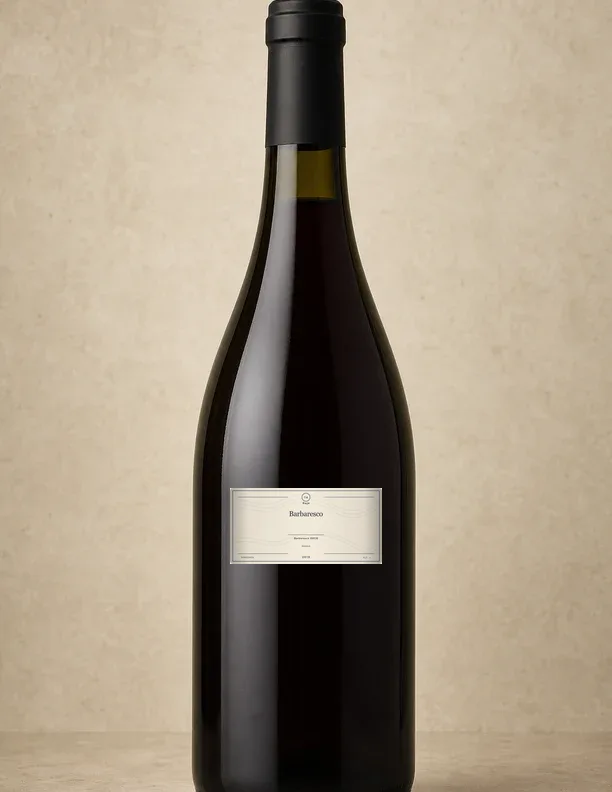
Drag to rotate, then use the wheel or pinch gesture to zoom. The points open notes about the shape.
This device is using the static edition. The label and every annotation remain accessible.
05 · How it is made
How it is made
Gaja presents Barbaresco as a core Nebbiolo expression. Winemaking must extract structure without letting floral perfume disappear behind oak.
06 · Why it matters
Why it matters
The bottle is educational because it breaks the idea that intense red wine must be opaque. Nebbiolo can be pale, aromatic, and still stern.
07 · Serving and table
Serving and table
- Temperature
- 16-18 °C
- Decanting
- 1 to 2 hours when young; handle old bottles carefully.
- Glass
- Large Burgundy glass for perfume and tannin.
Pairings
- brasato
- tajarin with mushrooms
- hard cheeses
- funghi risotto
08 · Points to remember
Points to remember
- Nebbiolo is the grape of Barbaresco DOCG.
- Pale color does not mean low structure.
- Tannin and acidity are the teaching axes of the style.